

We often think about health in familiar ways: eating well, exercising, sleeping properly, and staying socially connected. But growing research suggests there may be another important ingredient in wellbeing – creativity.
Professor Daisy Fancourt, one of the world’s leading researchers in arts and health at University College London, describes the arts as emerging evidence for a kind of “fifth pillar of health”. In her latest book, The Art Cure, she brings together hundreds of peer-reviewed studies showing how creative activities can support both mental and physical wellbeing.
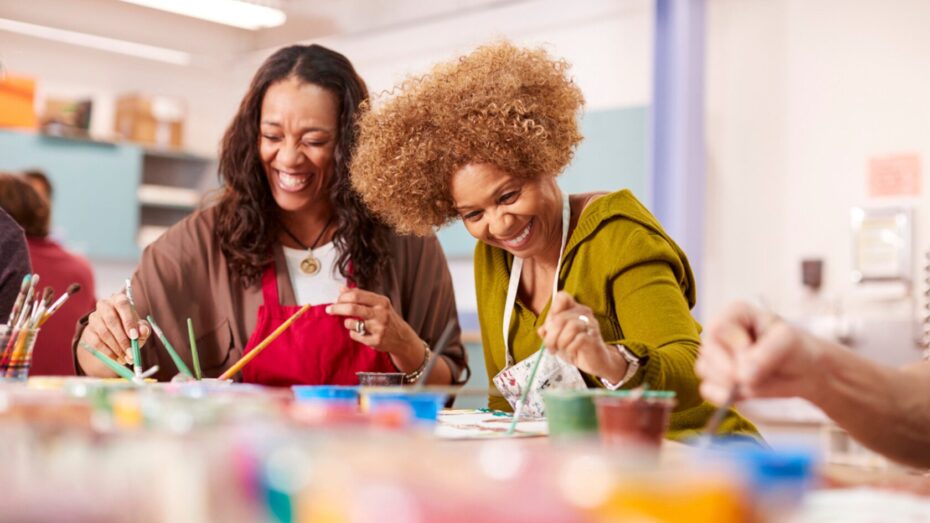
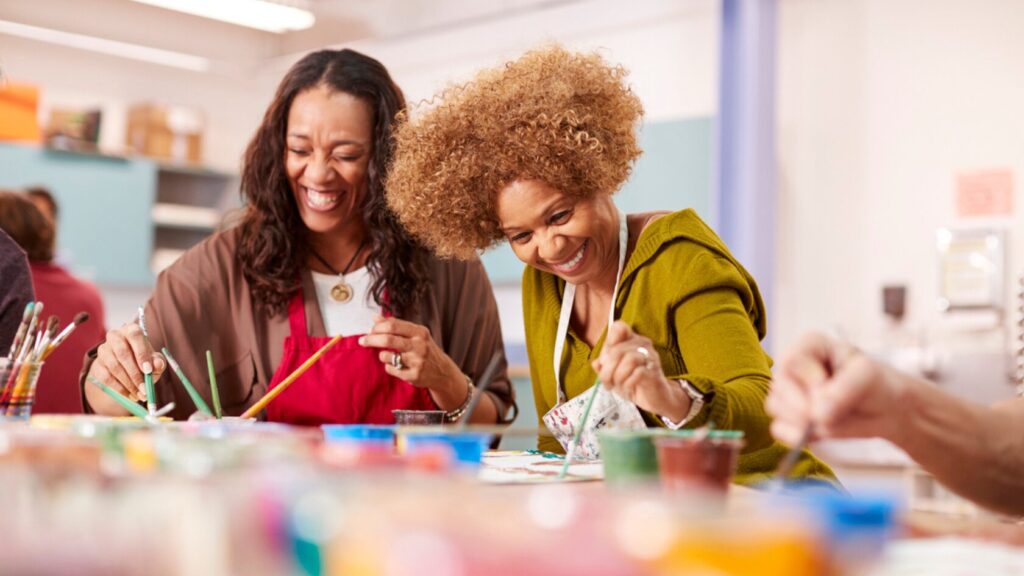
The important thing? You do not need to be a professional artist to benefit. Singing in a choir, joining a dance class, acting, painting, crafts, photography, or creative writing can all positively affect health. Research shows that participation itself matters most.
Here are four evidence-backed ways the arts can support wellbeing.
#1 Reduce Stress (Without Trying Too Hard)- Switch off your mind by switching on your creativity
Creative activities help absorb attention so fully that worries temporarily fade into the background. Psychologists often describe this as a “flow state” – a feeling of focused immersion that naturally lowers stress.
Fancourt’s research highlights studies showing that arts participation can reduce cortisol, one of the body’s main stress hormones. One widely cited study found that just 45 minutes of creative art-making significantly lowered cortisol levels regardless of artistic ability.
Music-making can be especially powerful. Group singing, for example, combines breathing, focus, and social connection, all of which support emotional regulation. Community singing programmes for people living with chronic pain have also been linked to improved coping and reduced feelings of isolation.
Unlike some wellbeing practices that can feel like hard work, creativity often reduces stress simply because it is enjoyable.
#2 Express What You Can’t Say – Some things are easier to show than to tell
Not every emotion is easy to explain. Creative expression offers another route.
Through dance, singing, theatre, painting, or writing, people can explore emotions safely and indirectly. Research highlighted in Art Cure found that arts engagement supports emotional regulation and psychological processing, with studies involving more than 47,000 participants linking regular creative activity to improved mental wellbeing and emotional expression.
There are powerful examples in healthcare settings too. Music programmes for people living with dementia have shown how familiar songs can unlock emotional responses and social connection even when verbal communication becomes difficult.
Drama and movement-based activities can also help build confidence and empathy. Creative spaces often feel freeing because there is rarely one “correct” answer – experimentation and self-expression are encouraged.
#3 Boost Your Mood (Quickly) – Creativity is a natural mood-lifter
Many people notice they feel lighter after a choir rehearsal, dance class, or creative workshop – and research suggests there is a good reason for that.
Enjoyable creative activities stimulate the brain’s reward systems and are consistently linked with improved mood and reduced anxiety.
In The Art Cure, Fancourt discusses research showing that regular cultural engagement is linked to a 4% slower rate of biological ageing, with participants showing stronger emotional and mental wellbeing over time.
One particularly well-known study involving new mothers experiencing postnatal depression found that those taking part in group singing sessions experienced faster improvements in symptoms compared with some other community activities.
Creative hobbies also bring a sense of achievement. Finishing a sketch, learning a song, or performing a scene can provide a satisfying sense of progress that is often missing from screen-heavy modern life.
#4 Develop Resilience Through Play – It’s okay to get it wrong here
Creative environments encourage experimentation rather than perfection.
In art, mistakes are part of the process. A painting can change direction. An improvisation can fail and recover. A dance routine can be adapted. This flexibility helps people become more comfortable with uncertainty and setbacks.
Fancourt’s research suggests arts participation can strengthen confidence, adaptability, and coping skills over time.
Participatory theatre and community arts programmes are increasingly used to help people build resilience, communication skills, and social confidence in supportive environments.
Perhaps most importantly, creativity reminds adults of something we often forget: play matters.
You do not need to sing beautifully, dance perfectly, or paint professionally to experience the wellbeing benefits of creativity.
The positive effects begin with taking part.
- Daisy Fancourt, The Art Cure: A Guide to Improving Your Health with the Arts
- World Health Organisation report on arts and health (2019)
- Kaimal, G. et al. (2016). Reduction of Cortisol Levels Following Art Making
- Research on group singing and postnatal depression by Daisy Fancourt and colleagues